
Last updated: October 20, 2026
Key Takeaways
- Shawarma seasoning is built on cumin, coriander, garlic, paprika and black pepper, with warm spices such as cinnamon, allspice and cardamom added to taste.
- Sumac brings a lemony tang and turmeric brings the golden colour, which is why so much shawarma rice is yellow.
- Shawarma seasoning is savoury, not hot: most blends carry little or no chili heat.
- In Canada, a label may list herbs and spices under the single word “spices”, but salt must always be named separately.
- Edi’s Shawarma Seasoning names all twelve spices on the pouch and contains no salt.
You’ve stood at the counter watching it happen. A tall cone of meat turning on a vertical spit, the edges crisping, a long knife shaving off ribbons that land straight in a warm pita.
That smell is the seasoning. It’s also the hardest part to pin down at home, because it isn’t one flavour.
Even the name comes from the spit: shawarma is usually traced to the Turkish word çevirme, “turning”. The spices are a different story, and every cook tells it a little differently.

What Spices Are in Shawarma Seasoning?
Ask five shawarma cooks for their blend and you’ll get five answers. Ask what they share and the list gets short very quickly.
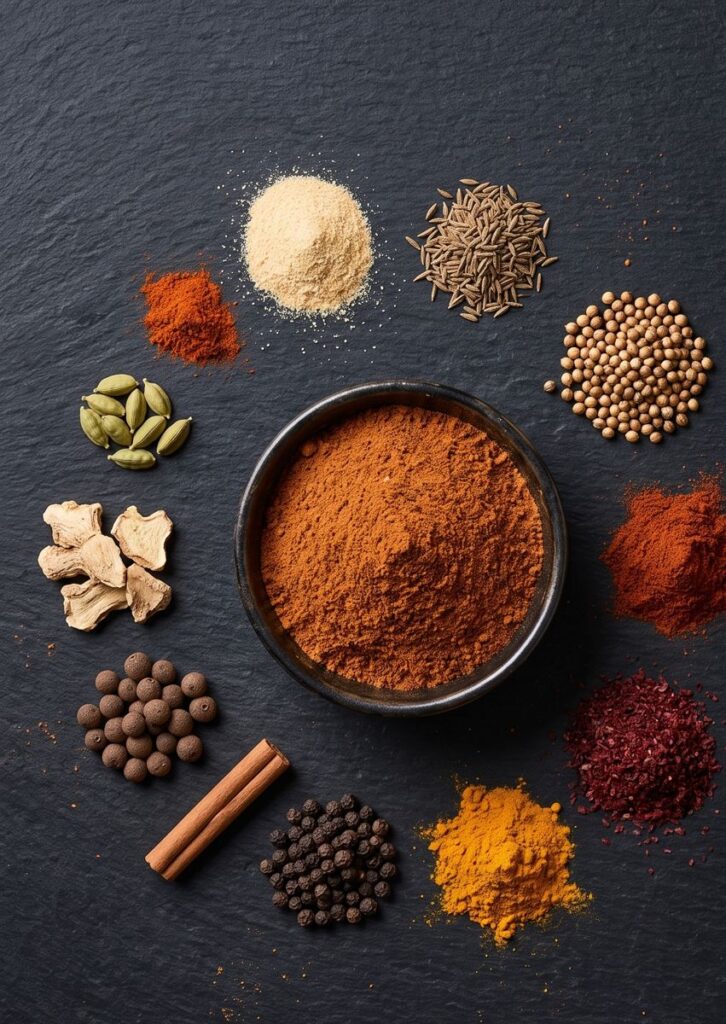
Almost every shawarma seasoning starts with the same five: cumin, coriander, garlic, paprika and black pepper. Think of them as the onions and stock of a soup. Nobody orders the soup for them, but take them out and nothing else holds together.
After that, cooks reach for the warm spices: cinnamon, allspice, cardamom, cloves or nutmeg, in small amounts. Many add sumac for a lemony lift and turmeric for colour. A pinch of chili, if any, is there for aroma rather than heat.
That’s why two shawarma blends can share a name and still taste different. The base is fixed. The top notes are the cook’s signature.
What Does Each Spice Actually Do?
A good shawarma blend works like a choir. No single voice should be heard on its own, and you’d notice instantly if one went missing.
| Spice | Job in the blend | What you’d miss without it |
|---|---|---|
| Garlic | Savoury backbone | Depth; the blend tastes thin |
| Cumin | Earthy, toasty warmth | The “grill” smell |
| Coriander | Citrusy, floral lift | Brightness under the cumin |
| Paprika (often smoked) | Colour and gentle smoke | The deep red-brown crust |
| Sumac | Tart, lemony tang | The sharp edge that cuts fat |
| Turmeric | Golden colour, mild earthiness | The yellow tint on chicken and rice |
| Black pepper | Bite | Lift at the finish |
| Cinnamon, allspice, cardamom | Warm, rounded sweetness | The note people can’t name but miss |
| Ginger | Gentle warmth | Freshness behind the warm spices |
| Cayenne (a little) | Aroma, a faint glow | Almost nothing, which is the point |
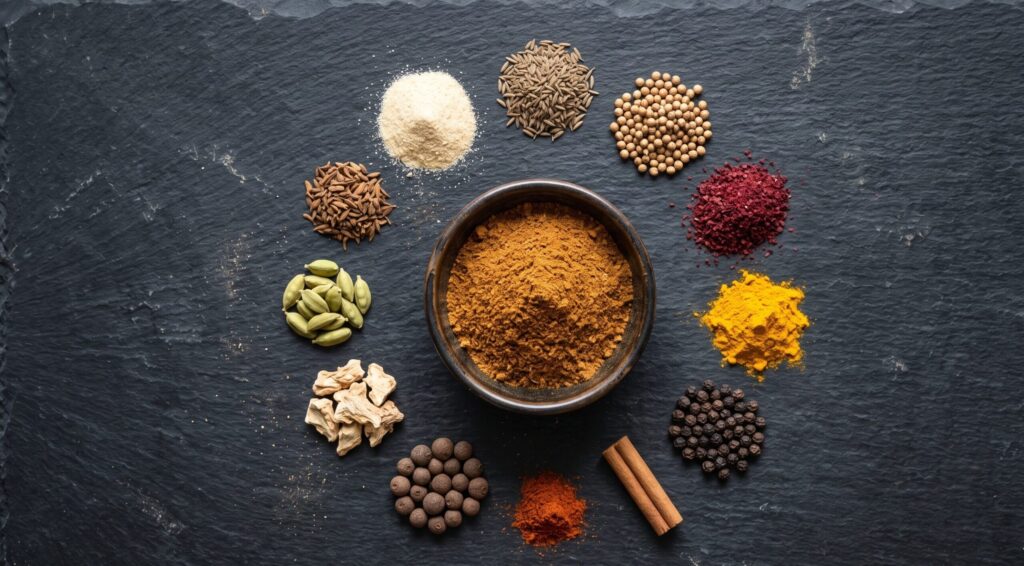
Sumac deserves its own line. It’s a dried, deep red berry with a tangy, lemony taste, and it does the job a squeeze of lemon does at the table. Our Ground Sumac is the same spice, sold on its own.
If you’ve ever wondered why shawarma tastes faintly sweet without any sugar, look at the warm spices. They’re used in small amounts, which is exactly why you taste them without being able to name them.
Chicken Shawarma vs Beef and Lamb: Does the Blend Change?
Same suit, different tie. The core five stay put whichever meat is on the spit.
Chicken shawarma tends to lean on garlic, turmeric and the brighter spices, often with lemon and yogurt in the marinade. That’s where the golden colour comes from.
Beef and lamb shawarma usually lean warmer: more allspice, cinnamon and cardamom, because richer meat can carry them. Regional habits shift the balance again, and Lebanese, Syrian, Turkish and Gulf cooks each have their own house style.
That’s also why one all-purpose blend works across both. A garlic-forward blend with a light hand on the warm spices suits chicken. Add a little extra to the marinade and it sits comfortably on beef.

Is Shawarma Seasoning Spicy?
It’s a reasonable assumption. It’s also wrong.
Shawarma seasoning is warm the way a wool sweater is warm, not the way hot sauce is. Cumin, cinnamon and black pepper feel warming, but none of them brings real chili heat.
Most blends carry a little cayenne or chili for aroma, and some carry none at all. Any burn you remember from a shawarma shop almost always came from the hot sauce or pickled peppers, not the meat.
Edi’s blend keeps cayenne to about one percent of the mix: enough to smell, not enough to feel.
How to Read a Shawarma Seasoning Label in Canada
Two pouches can both say “shawarma seasoning” and contain very different things. The label is where you find out which one you’re holding.
Start with the order. Canadian rules require ingredients to be listed in descending order of proportion by weight, so the first word on the list is the biggest share of the blend.
Then look for the word “spices” on its own. The same rules let a label declare herbs and spices collectively, so “spices” tells you about as much as “groceries” on a receipt.
Finally, check for salt. Salt can never hide inside “spices”; it must be named separately. If salt is near the top of the list, the blend is doing your salting for you, so cut back on the salt you add to the meat.
For the record, our Shawarma Seasoning lists all twelve: garlic powder, cumin, coriander, smoked paprika, sumac, turmeric, black pepper, cinnamon, allspice, ginger, cardamom and cayenne pepper. No salt, so you season the meat your way.

Shawarma, Doner and Donair: Same Seasoning?
If you grew up in the Maritimes, “meat on a spit” may mean something else entirely. The Halifax donair is its own dish, with its own seasoning and that famous sweet garlic sauce.
Shawarma, Turkish doner and the Halifax donair share a cooking method, not a spice cabinet. Shawarma is the most heavily spiced of the three, with cumin, coriander and the warm spices doing the work.
Doner tends to keep the seasoning simpler and let the meat and onion lead. Halifax-style donair recipes usually lean on paprika, oregano, garlic and a little cayenne. Swap one blend for another and you’ll get a perfectly good dinner, just not the one you were craving.
If you’re weighing up a Middle Eastern seven spice blend instead, we’ve compared the two side by side in Is 7 Spice the Same as Shawarma Seasoning?
Frequently Asked Questions
What spices are in shawarma seasoning?
Most blends combine cumin, coriander, garlic, paprika and black pepper with warm spices such as cinnamon, allspice and cardamom. Many also add sumac for tang and turmeric for colour.
Is shawarma seasoning spicy?
No. It’s warm and savoury, and most blends carry little or no chili heat; the burn at a shawarma shop usually comes from the hot sauce.
Does shawarma have cinnamon in it?
Usually, yes, in a small amount. Cinnamon, allspice and cardamom give shawarma its rounded, faintly sweet warmth.
Why is shawarma rice yellow?
Mostly turmeric, which many cooks add to the rice and the chicken marinade. It brings a golden colour and a mild, earthy note.
Is there MSG in shawarma seasoning?
Some commercial blends contain it, and the label must name it. Edi’s Shawarma Seasoning contains no MSG and no salt.
What are the pink things in shawarma?
Pickled turnips, coloured pink with a little beetroot in the brine. They add crunch and acidity that cut through the rich meat.
What can I substitute for shawarma seasoning?
Mix cumin, coriander, garlic powder and paprika in roughly equal parts, with a pinch of cinnamon and black pepper. A Middle Eastern seven spice blend also works, with a little extra garlic.
Is garam masala the same as shawarma seasoning?
No. They share cumin, coriander and some warm spices, but garam masala has no garlic or sumac and leans harder on clove and black pepper.
The Short Version
Shawarma seasoning is a balance, not a single flavour: an earthy cumin and coriander base, garlic for depth, sumac for tang and a whisper of warm spice on top. Read the label before you buy, because the first ingredient tells you more than the name on the front.
When you’d rather skip buying twelve spices for one recipe, our blend does the measuring for you.