

Last updated: October 2, 2026
Key Takeaways
- Ras el hanout, the signature spice blend of North African and Moroccan cooking, tastes warm and lightly sweet, not hot: an earthy cumin and coriander base, sweet spices behind it, and a faint floral top note from green cardamom and dried rose petals.
- It is not a chili blend. Edi’s version carries a small amount of cayenne for lift and no paprika at all.
- By taste, its closest relatives are garam masala and baharat. It is not curry powder, and it is not allspice.
- Ceylon cinnamon rather than cassia keeps the sweet side soft and faintly citrusy instead of sharp.
- Best with tagines and stews, roast chicken and lamb, sheet-pan vegetables, couscous and grains. Start with half a teaspoon.
Most people open a pouch of ras el hanout braced for heat. The name sounds like a challenge, and “spice blend” on a label usually means chili somewhere.
It never arrives. What you get instead is warmth, a low sweetness, and a floral note sitting on top that almost nothing else in a spice drawer does. Closer to mulled wine than to hot sauce.
Here is what that tastes like on a plate, layer by layer, and what to cook with it first.
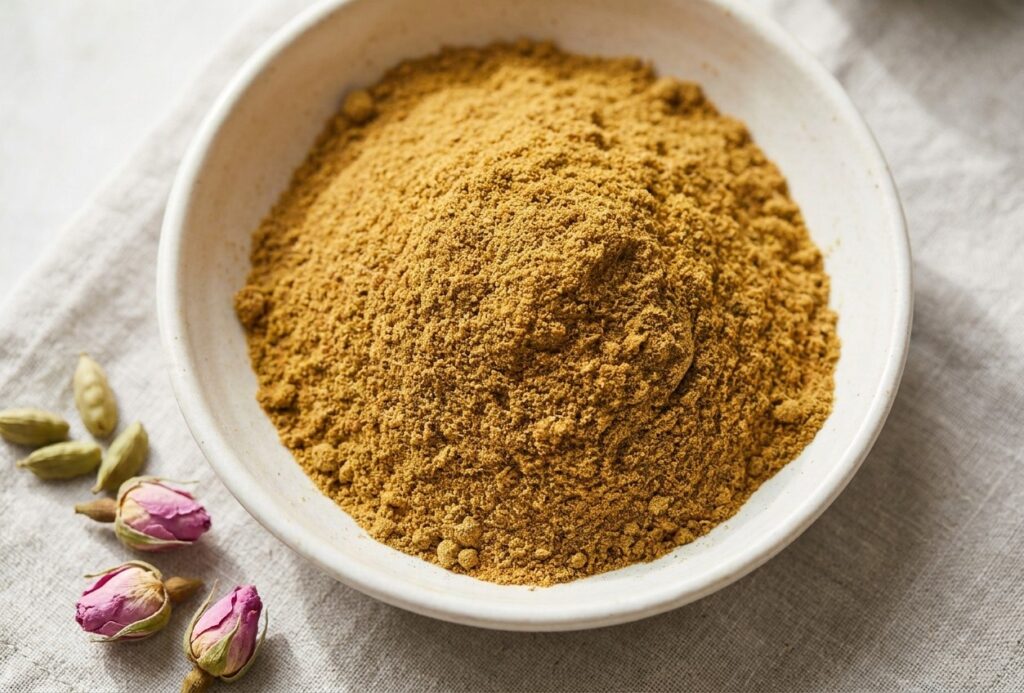
First spoonful: warm, sweet, and nowhere near hot
Open the pouch and the cumin reaches you before anything else. Underneath it, something sweet and slightly resinous. Then, a beat later, the rose.
That sequence is the whole answer to “is it spicy.” There is cayenne in the blend, but it sits near the bottom of the list and behaves like the pinch of salt in a chocolate recipe: you would notice its absence, not its presence.
If you want a reference point, think of the warmth of a cinnamon bun rather than the burn of chili oil. The heat register is simply not where this blend lives.
What ras el hanout means in English
Ras el hanout is Arabic for “head of the shop,” usually rendered in English as “top of the shop.” It is the signature blend of North African cooking, Moroccan above all, and the name describes a spice merchant’s best blend, the one made from the top shelf.
That is also why no two versions are identical. Britannica notes that a ras el hanout can run to dozens of spices, with each blender balancing the formula differently. The name promises quality, not a fixed recipe.
So “what does ras el hanout taste like” always has a second half: whose ras el hanout. The answer below is for a twelve-spice blend, every ingredient named on the label.
The three layers you are actually tasting
Aromatic blends work the way a perfume does, and ras el hanout is the clearest example in the drawer. Base notes, heart notes, top notes.
The base is cumin, coriander and ginger. Earthy, a little bitter, faintly citrus from the coriander. This is the part that reads as savoury and keeps the blend from tipping into dessert.
The heart is Ceylon cinnamon, allspice, clove and nutmeg, with turmeric carrying depth and the natural golden colour. Sweet, but sweet the way a braise is sweet, not the way sugar is.
The top is green cardamom and dried rose petals. Faint, floral, slightly cooling. This is the layer most blends skip, and it is the reason a dish made with ras el hanout smells different from the same dish made with any other warm blend.
You will notice the base in the mouth and the top in the nose. That split is the signature.
What ras el hanout is similar to, and what it is not
The nearest neighbours are garam masala and baharat. All three are warm, sweet-leaning blends built to season a whole dish rather than add a single note.
The differences are real, though. Garam masala usually leans on cardamom, cinnamon, clove and black pepper, and its formula varies as much as ras el hanout’s does. Baharat as Edi blends it is built on black pepper, sweet paprika, cumin and fenugreek. Ras el hanout is the only one of the three finished with rose petals and green cardamom.
Swapping them is like using a lemon where a recipe asked for a lime. The dish still works, and anyone who knows will notice.
Two things it is not: it is not curry powder, which is usually led by turmeric with fenugreek and chili, so it reads earthier and often hotter, with no floral finish, and it is not allspice, which is a single berry rather than a blend. The word “warm” doing double duty in those descriptions is what causes the confusion.
Why Ceylon cinnamon changes the whole blend
Most cinnamon sold in North America is cassia. Ras el hanout is one of the blends where that choice is audible.
Cassia is the cinnamon in a Christmas candle: bold, hot and sharp. Ceylon is the cinnamon in a pastry shop: softer, more delicate, faintly citrusy. Put cassia into a blend that already has clove and allspice and the sweet side starts shouting over the rose.
Edi’s ras el hanout is built with Ceylon. It is the reason the floral top note survives the cooking instead of getting flattened.
The full twelve, in order on the label: cumin, coriander, ginger, turmeric, Ceylon cinnamon, black pepper, green cardamom, allspice, cayenne pepper, cloves, nutmeg, dried rose petals. No paprika, no salt, no MSG, no anti-caking agents. Packed in small batches in a resealable, light-blocking pouch.

What to cook with it first
Bloom half a teaspoon in warm oil before anything else goes in the pan. The kitchen will tell you it is working, the same way garlic announces itself the second it hits heat.
- Tagines and stews. Add early so the spices open into the liquid. Half a teaspoon to start, for four servings.
- Roast chicken and lamb. About a tablespoon per 500 g, dry-rubbed, or loosened with olive oil and lemon.
- Sheet-pan vegetables. Carrots, squash and cauliflower are the best of them. Toss with oil and roast hard.
- Couscous, rice and grains. A pinch stirred through as the grains steam turns a plain side into the point of the meal.
The one to try if you only try one is the dish the blend was built for: a chicken tagine. Brown chicken thighs, soften an onion in the same pan, bloom the ras el hanout in the fat, then add a cup of stock and a handful of dried apricots or green olives. Cover and simmer low for 40 minutes. No tagine pot needed; a heavy lidded pan does the job. Serve it over couscous. The sweet spices meet the fruit, and the rose comes up in the steam when you lift the lid.

Frequently asked questions
Is ras el hanout spicy?
No. Edi’s blend contains a small amount of cayenne for lift, but the heat is low and there is no paprika or chili base. It reads as warm and lightly sweet.
What is the closest spice to ras el hanout?
Garam masala is the closest single blend, followed by baharat. Neither carries the floral rose and green cardamom finish, so the dish will taste warmer and less perfumed.
Can I use garam masala instead of ras el hanout?
Yes, at the same amount. Expect the dish to lose the floral top note and lean more toward cardamom, clove and black pepper.
What does ras el hanout go with?
Tagines and stews, roast chicken and lamb, roasted root vegetables, and couscous or rice. It suits anything cooked slowly or roasted hard.
Is ras el hanout the same as baharat?
No. Baharat as Edi blends it is built on black pepper, sweet paprika, cumin and fenugreek, with no rose petals or green cardamom. Ras el hanout is sweeter and finishes floral.
Bottom line
Ras el hanout is a warm blend with a floral finish, and the floral finish is the part worth buying it for. Nothing else in the drawer does it. Start where it comes from, with a chicken tagine over couscous, half a teaspoon at a time, and let the rose come up behind the cumin.
Shop Ras el Hanout — twelve spices, all named on the label.
