Is 7 Spice the Same as Shawarma Seasoning?
Last updated: July 22, 2026
Key Takeaways
- No. Seven spice and shawarma seasoning are related, but built for different jobs.
- Seven spice is the Middle Eastern name for baharat — a warm, all-purpose blend. The classic Lebanese version leads with cinnamon; Turkish and Gulf styles build it differently, so no two baharats are identical.
- Shawarma seasoning takes a warm base and adds garlic, sumac and turmeric — the savoury, tangy layer a spit-roast needs. Garlic and sumac are the clearest tell.
- “Seven spice” is a slippery name: in Middle Eastern cooking it means baharat, not Chinese five-spice — and the blend varies by region.
- You can start shawarma from seven spice, but it won’t taste like shawarma until the garlic and sumac go in.
Two jars sit in the cupboard. Both brown, both smell warm, both claim a Middle Eastern accent. Wondering whether they’re the same thing is fair — a lot of the spices overlap. But they’re built for different plates, and swapping one for the other is where a dish quietly loses its way. Here’s what actually separates them, and when to reach for each.
The short answer: no, but they’re close cousins
No — seven spice and shawarma seasoning are not the same. They share a bloodline; they do not share a job.
Seven spice — baharat — is the warm, aromatic base that runs through Levantine cooking: rice, stews, kofta, soup. Shawarma seasoning is aimed at one thing, spit-roasted meat, and it carries the garlic, tang and smoke that job demands.
The cleanest way to hold the difference: seven spice is the warm backbone, and shawarma seasoning is that backbone plus the garlic, sumac and smoke a spit-roast needs. One is an ingredient in the other’s job, not a straight swap for it.
Think of a plain black tea versus a chai. Same leaf underneath. One has been built out for a specific cup.
What “7 spice” actually is — and why the name is slippery
Seven spice sounds like a precise recipe. It isn’t.
In Middle Eastern kitchens, “seven spice” means baharat — in Lebanese Arabic, sab’a baharat, literally “seven spices.” The classic Lebanese version is warm and cinnamon-forward: allspice, black pepper, cinnamon, clove, cumin, coriander and nutmeg. Rounded, never hot.
But baharat just means “spices,” and no two are the same. A Turkish or Gulf-style baharat often drops the cinnamon and leans on paprika, ginger or fenugreek instead. So seven spice names a family, not a fixed recipe — the Lebanese blend is one member of it, not the whole set.
Edi’s own Baharat is a good example of the difference: it’s a seven-spice blend built on black pepper, cumin, allspice, cloves, ginger, paprika and fenugreek — warm and savoury, without the cinnamon lead of the Lebanese style.
The name travels badly, too. Chinese five-spice and Indian garam masala both carry a number and neither is interchangeable with baharat. TasteAtlas tracks how far the blend drifts from region to region.
What shawarma seasoning adds that 7 spice doesn’t
Picture the meat coming off a vertical spit — charred at the edge, juicy underneath, unmistakably savoury before you’ve even tasted it. That flavour doesn’t come from the warm spices alone.
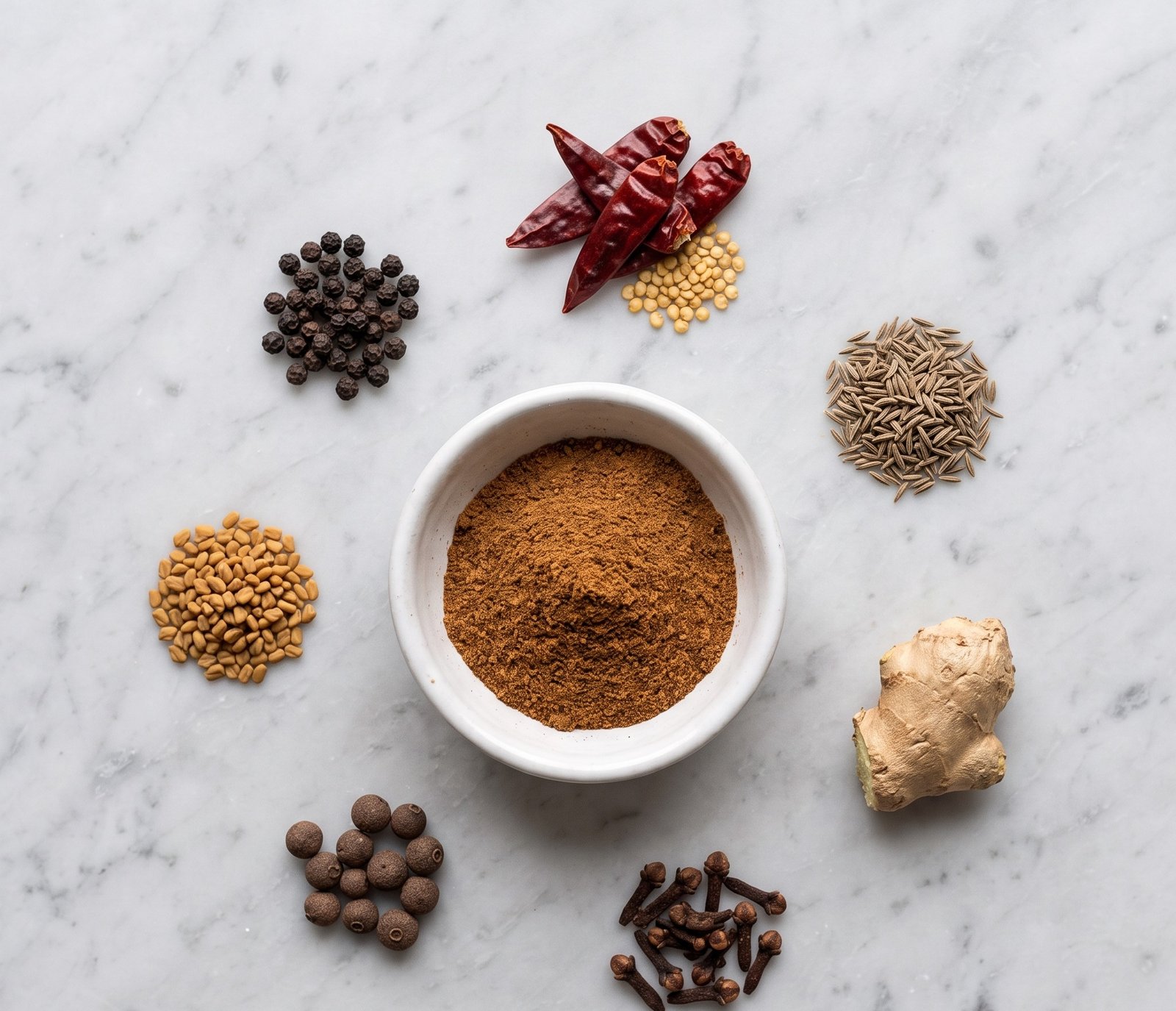
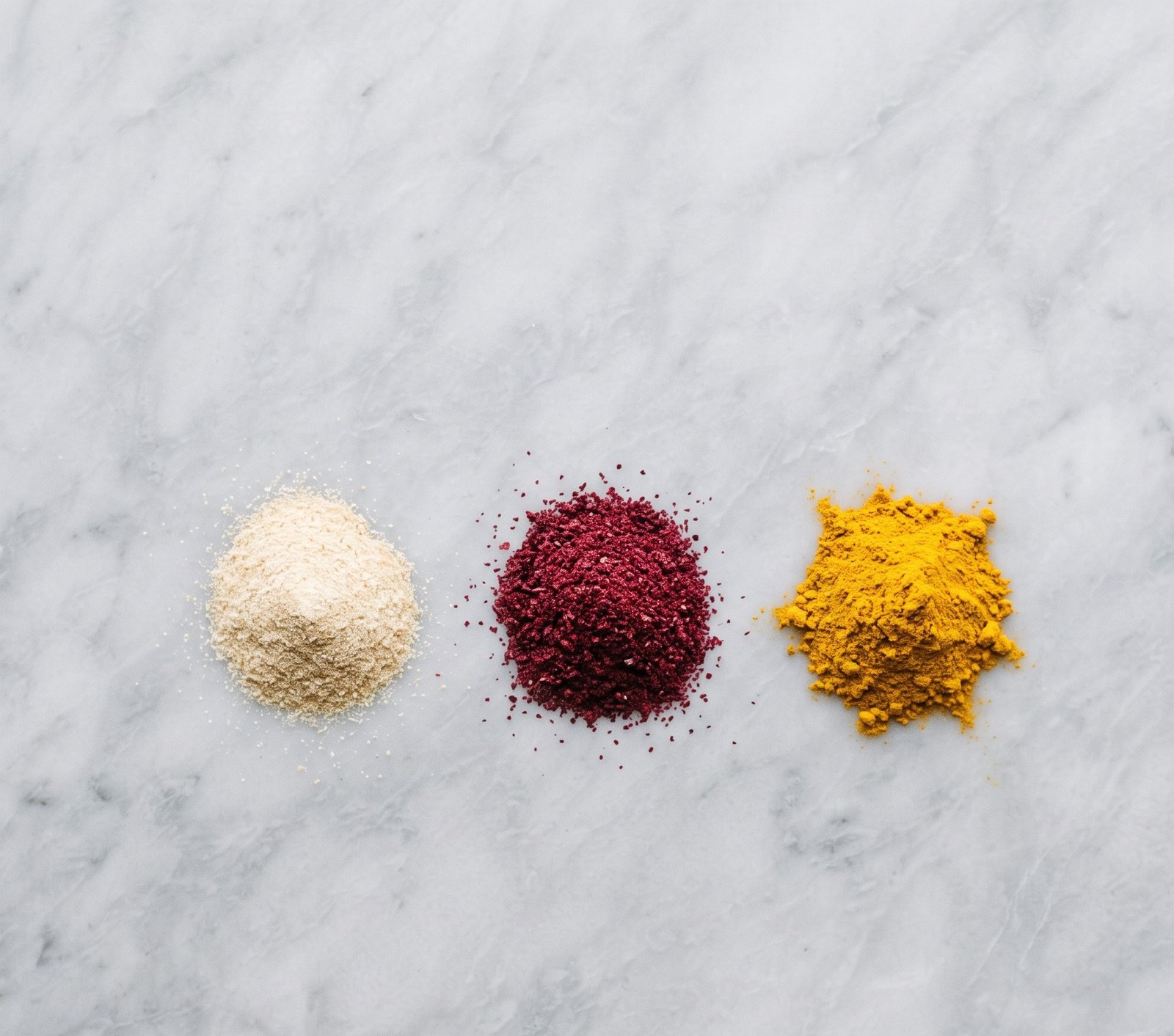
It comes from the layer shawarma seasoning piles on top of the warm base. Garlic leads — the single biggest tell, and something no baharat carries. Real sumac brings a lemony, tangy edge; sumac is tart and bright, not a generic sour note. Turmeric deepens the colour and earthiness, and smoked paprika lays down that off-the-grill smoke.
Edi’s shawarma blend runs twelve spices for exactly this reason: garlic, cumin and coriander for the savoury base, sumac and smoked paprika for the signature tang and smoke, then cinnamon, allspice, cardamom and ginger sitting behind them, with about one percent cayenne for aroma rather than heat.
Line them up and the gap is obvious. Baharat is the warm chord; shawarma seasoning is the whole arrangement written for grilled meat.
Can you swap one for the other?
You can, in one direction, with a small assist.
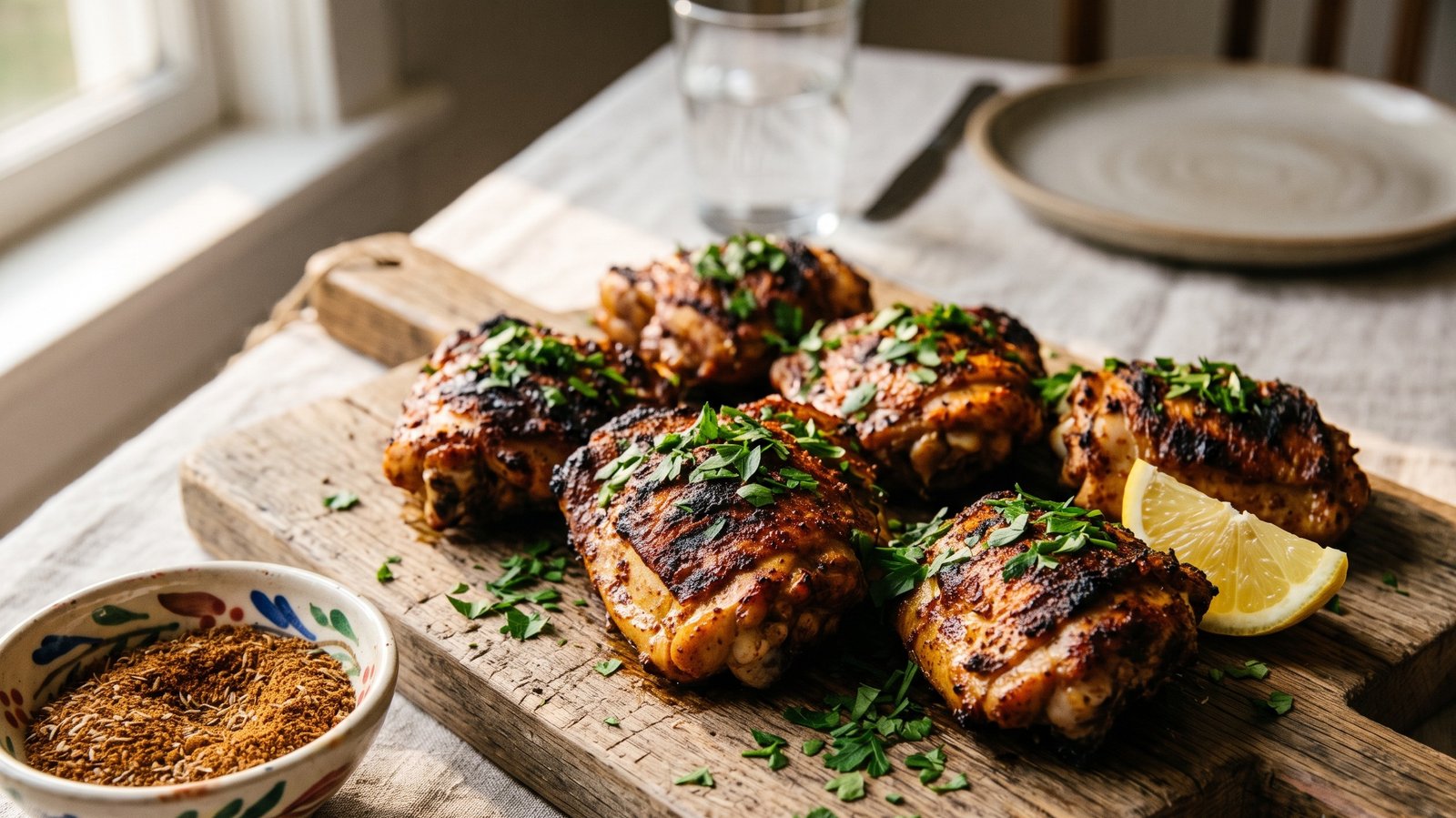
Going from seven spice to shawarma: start with baharat, then add garlic powder and sumac — a squeeze of lemon works if you have no sumac — and a pinch of smoked paprika. You won’t nail it exactly, but you’ll land in the right postal code.
Going the other way is harder. Shawarma seasoning in a dish that wants plain baharat — a delicate rice, a lightly spiced stew — brings garlic and tang that don’t belong there. It’s like using a marinade where the recipe asked for a pinch of cinnamon. The seasoning isn’t wrong; it’s just too loud for that plate.
So: baharat can be coaxed toward shawarma. Shawarma seasoning rarely wants to go back the other way.
What about garam masala? The other blend people confuse it with
Garam masala gets pulled into this question a lot, and it’s the easiest to rule out.
It’s a warm blend like baharat, yes — but it’s South Asian, built for curries, and it carries no garlic and no sumac. Drop it onto chicken expecting shawarma and you’ll get something aromatic and lovely that tastes nothing like a wrap off the spit.
Same warmth, different passport. Garam masala answers to a different cuisine, and it can’t stand in for shawarma seasoning without a real rebuild.
Which one should you buy?
This is the part that actually decides the jar.
If you’re cooking shawarma, grilled chicken, beef or lamb wraps, roasted vegetables or crispy chickpeas, reach for shawarma seasoning — the garlic-and-sumac layer is already built in, so plain chicken comes out of the oven tasting like it came off a spit.
If you want one warm, all-purpose Middle Eastern base for rice, stews, kofta and soups, that’s baharat — the backbone blend you season broadly with. And if you like building your own, keeping ground sumac on hand lets you push any warm blend toward shawarma whenever you want.
Plenty of kitchens keep both. They’re not rivals on the shelf — one seasons the everyday, the other builds the grill night.
Frequently Asked Questions
Is 7 spice used for shawarma?
Often as a base, yes. But real shawarma seasoning adds garlic, sumac and smoke on top of the seven-spice warmth, which is what makes it taste like shawarma.
What is equivalent to 7 spice?
Baharat, the warm Middle Eastern blend. The classic Lebanese seven-spice is black pepper, allspice, cinnamon, clove, cumin, coriander and nutmeg, though Turkish and Gulf baharats vary. It is not Chinese five-spice.
Is garam masala the same as shawarma seasoning?
No. Garam masala is a South Asian curry blend with no garlic or sumac, so it cannot stand in for shawarma seasoning without significant adjustment.
What spices are in shawarma seasoning?
Edi’s blend is twelve: garlic, cumin, coriander, smoked paprika, sumac, turmeric, black pepper, cinnamon, allspice, ginger, cardamom and a little cayenne.
Can I use baharat for shawarma?
Yes, as a starting point. Add garlic powder and sumac, or a squeeze of lemon and a pinch of smoked paprika, to bring it closer to a true shawarma flavour.
Is shawarma seasoning spicy?
No. It is savoury and aromatic rather than hot. Edi’s blend carries about one percent cayenne, enough for aroma but not for heat.
The short of it
Seven spice and shawarma seasoning come from the same warm family, but only one is built for the spit. Keep baharat for the everyday and shawarma seasoning for grill night, and you’ll never have to fake one with the other.
👉 Shop Shawarma Seasoning — twelve spices, no salt, ships across Canada