1 tsp Dried Mint to Fresh: The Exact Conversion Ratios

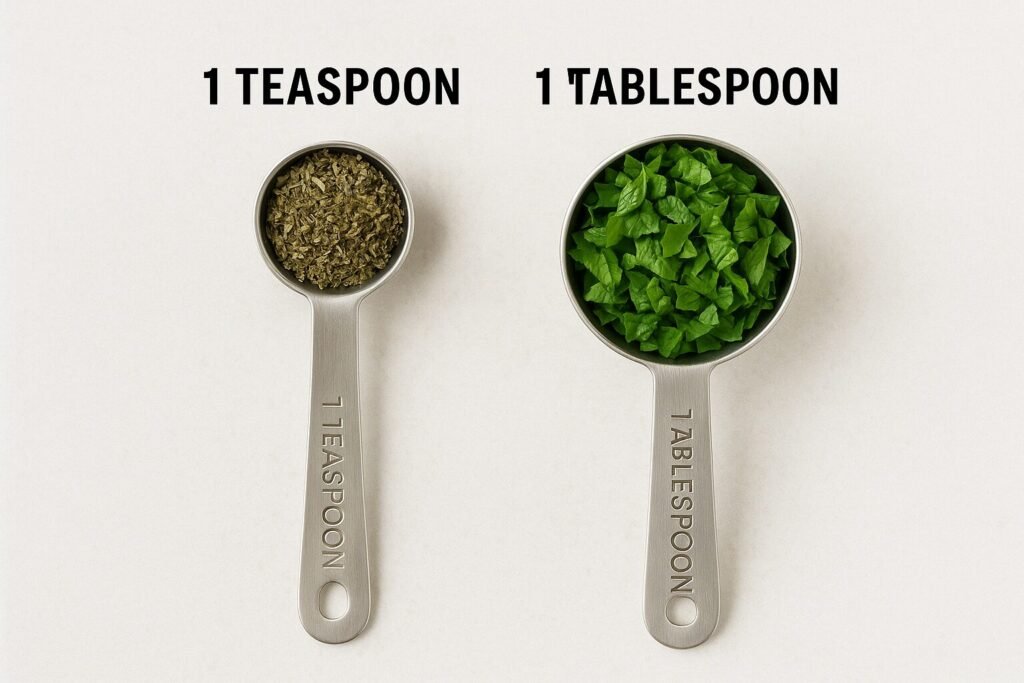
Two measuring spoons side by side showing 1 tsp dried mint and 3 tsp fresh mint on a wooden surface

Last updated: April 13, 2026

Two measuring spoons side by side showing 1 tsp dried mint and 3 tsp fresh mint on a wooden surface

Key Takeaways

  • 1 teaspoon dried mint = 3 teaspoons (1 tablespoon) fresh mint in nearly every cooked recipe
  • Drying removes water and concentrates the essential oils — same plant, smaller volume, bigger flavour
  • The ratio holds for cooked dishes — soups, stews, marinades, yogurt sauces, roasted vegetables
  • For cold drinks, raw salads, and garnishes, fresh mint cannot be replaced by dried
  • The reverse works too: if a recipe calls for 1 tsp dried and you only have fresh, use 1 tablespoon
  • Quality matters: dried mint that smells like old tea won’t perform regardless of the ratio

You’re halfway through a recipe. The fresh mint is gone. The dried mint is right there.

Good news: this is a solved problem.

1 teaspoon dried mint = 3 teaspoons fresh. That’s the conversion. Dinner is fine.

There are a few spots where that ratio needs a small tweak — and one where the swap doesn’t work at all. Both are worth knowing before you start eyeballing the jar. For a full breakdown of how the two forms compare, see our guide on dried mint vs fresh mint.


🔢 Why 1 tsp Dried Mint Equals 3 tsp Fresh

Fresh mint is mostly water. About 85–90% of it, by weight.

When that water leaves during drying, the essential oils — the compounds behind mint’s cooling, slightly sharp character — stay behind in a much smaller volume. Think of it like reducing a stock. Nothing new was added. It just got more itself.

That’s why a pinch of dried mint hits harder than a handful of fresh. Same plant. Different concentration.

The 1:3 ratio is the standard for nearly all dried herbs, not just mint. Culinary herb conversion guides put the dried-to-fresh baseline consistently at 1:3 across the board. Mint follows the same rule without exception.

One thing worth saying directly: if your dried mint smells faintly like old tea, the ratio won’t save you. The essential oils have already degraded — there’s nothing left to concentrate. Start with mint that still smells like mint, and the 1:3 holds every time.

Dried mint flakes mounded in a small white ceramic ramekin on a wooden surface

⚖️ When the Ratio Needs Adjusting

The baseline works for most cooked applications. A few situations call for a small tweak.

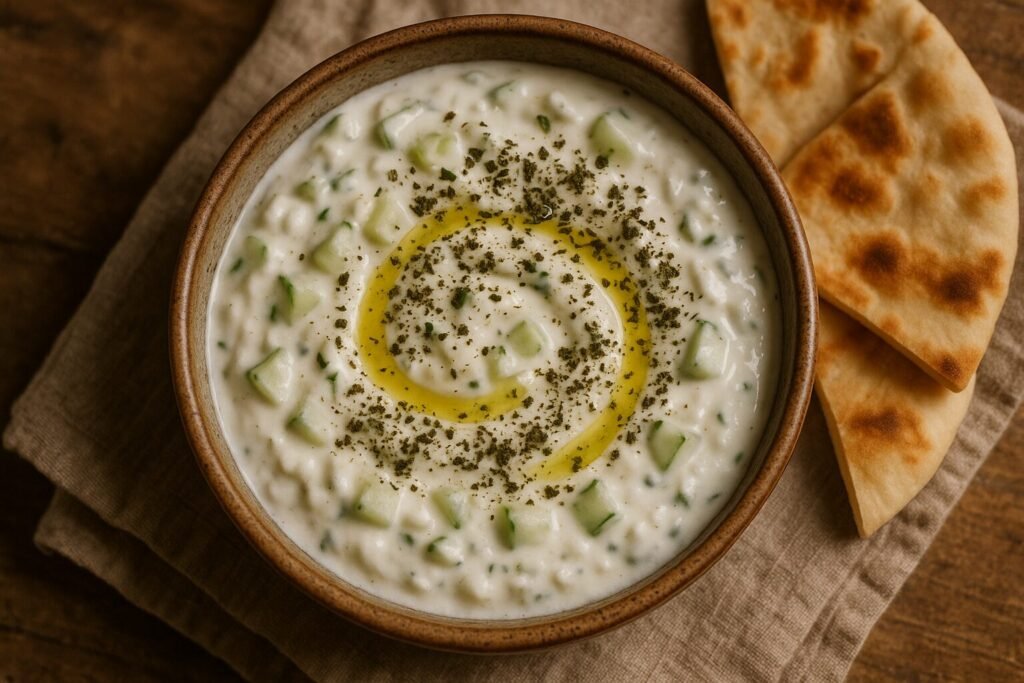
Finishing hot dishes at the last minute. Stirring dried mint into a yogurt sauce or cacık right before serving means it hasn’t had time to bloom. Think of it as asking someone to perform five minutes after they walked in the door — the talent is there, the warm-up isn’t. Bump it up slightly to 1¼ tsp per tablespoon of fresh, or give it a head start: 30 seconds in warm oil before it goes into the dish.

Marinades. The ratio is right. The timing isn’t. Dried mint needs at least 30 minutes to hydrate and release its flavour into a marinade. Taste it immediately and you’ll think it’s weak. It isn’t — it’s just not ready yet. Give it time before adjusting anything.

Baked goods. Dried mint at 1:3 is a reasonable substitute in cakes, cookies, or breads. The result will still taste like mint. But fresh mint has a brightness in baked applications that dried can’t fully replicate — the flavour shifts slightly earthier, slightly quieter. Manageable, not identical.

Soups, stews, lamb dishes, roasted vegetables, mint tea — straight 1:3, no adjustment needed.

Dried mint flakes sizzling in warm olive oil in a stainless steel saucepan on a gas stovetop

🚫 When Dried Mint Won’t Work at All

Three situations where more dried mint won’t solve the problem.

Cold drinks. Mojitos, iced mint lemonade, cold-brew mint tea. Fresh mint in a cold glass is doing two jobs at once — flavour and theatre. Dried mint does neither well here. Cold liquid extraction is slow and murky, and the visual is gone entirely. Fresh only.

Raw salads. Tabbouleh, fattoush, fruit salads. Fresh mint in a salad is as much about texture and colour as flavour. Dried mint can season a dish. It can’t be the herb in it.

Garnishes. If mint is sitting on top of something at the table, its job is partly visual. Rehydrating dried flakes on a finished plate are not the same thing. Fresh only.

Everything else — and it’s most things — is fair game. For a complete breakdown, see our guide on dried mint vs fresh mint.

Overhead view of iced mint lemonade and tabbouleh salad with fresh mint leaves on a marble surface

🔄 The Reverse Conversion: Fresh Instead of Dried

Equally useful to know: if a recipe calls for dried mint and you only have fresh, flip the ratio.

1 tsp dried → 1 tablespoon (3 tsp) fresh.

One note: fresh mint added to a long-simmering dish fades faster than dried. It’s the sprinter, not the distance runner. If the recipe relies on dried mint for sustained background flavour through a slow cook, fresh mint added only at the start will largely disappear by the time the dish is done. Add half at the beginning, the rest in the final five minutes — you’ll keep more of the character intact.

White ceramic bowl of yogurt sauce topped with dried mint and olive oil drizzle on a linen cloth

❓ FAQ

How much dried mint equals 1 tablespoon of fresh mint?

1 teaspoon. One tablespoon of fresh (3 teaspoons) converts directly to 1 teaspoon dried.

Is dried mint better for tea than fresh?

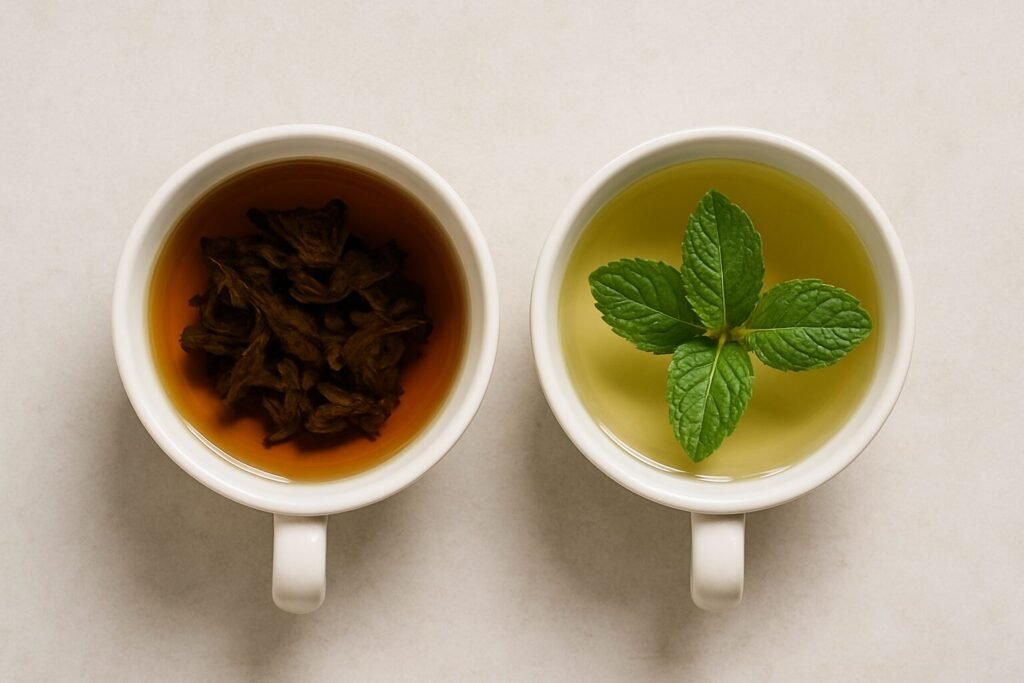
For most people, yes. It brews more consistently and produces a cleaner, more concentrated infusion. 1 teaspoon per cup, just-boiled water, steep 5–7 minutes.

Does dried mint taste the same as fresh?

Close, but not identical. Dried is earthier and more concentrated. Fresh is brighter and crisper. In cooked dishes the gap is small. In raw applications, you’ll notice it.

How do I know if my dried mint is still good?

Crush a pinch and smell it. Strong mint smell: still good. Faint or dusty: past its best. Stored airtight and away from heat, quality dried mint holds for up to two years.

Does the 1:3 ratio apply to other herbs?

Yes — it’s the standard baseline for most dried herbs. Oregano, thyme, and rosemary all follow it reliably. Basil, dill, and chives are less predictable because they lose more flavour in drying.


The ratio is simple. The exceptions are predictable. Now you have both.

👉 Shop Dried Mint Leaves