Last updated: September 11, 2026
Key Takeaways
- Allspice is one spice: the dried berry of the Pimenta dioica tree, native to Jamaica.
- Pumpkin pie spice is a blend of five spices — cinnamon, ginger, nutmeg, cloves and allspice.
- Allspice is roughly one ninth of pumpkin pie spice by volume, so it cannot replace the blend one-for-one.
- Allspice is used in savoury cooking far more than pumpkin pie spice is. It appears in Jamaican jerk and in Middle Eastern blends including Baharat.
- If allspice is all you have, use half the amount the recipe asks for.
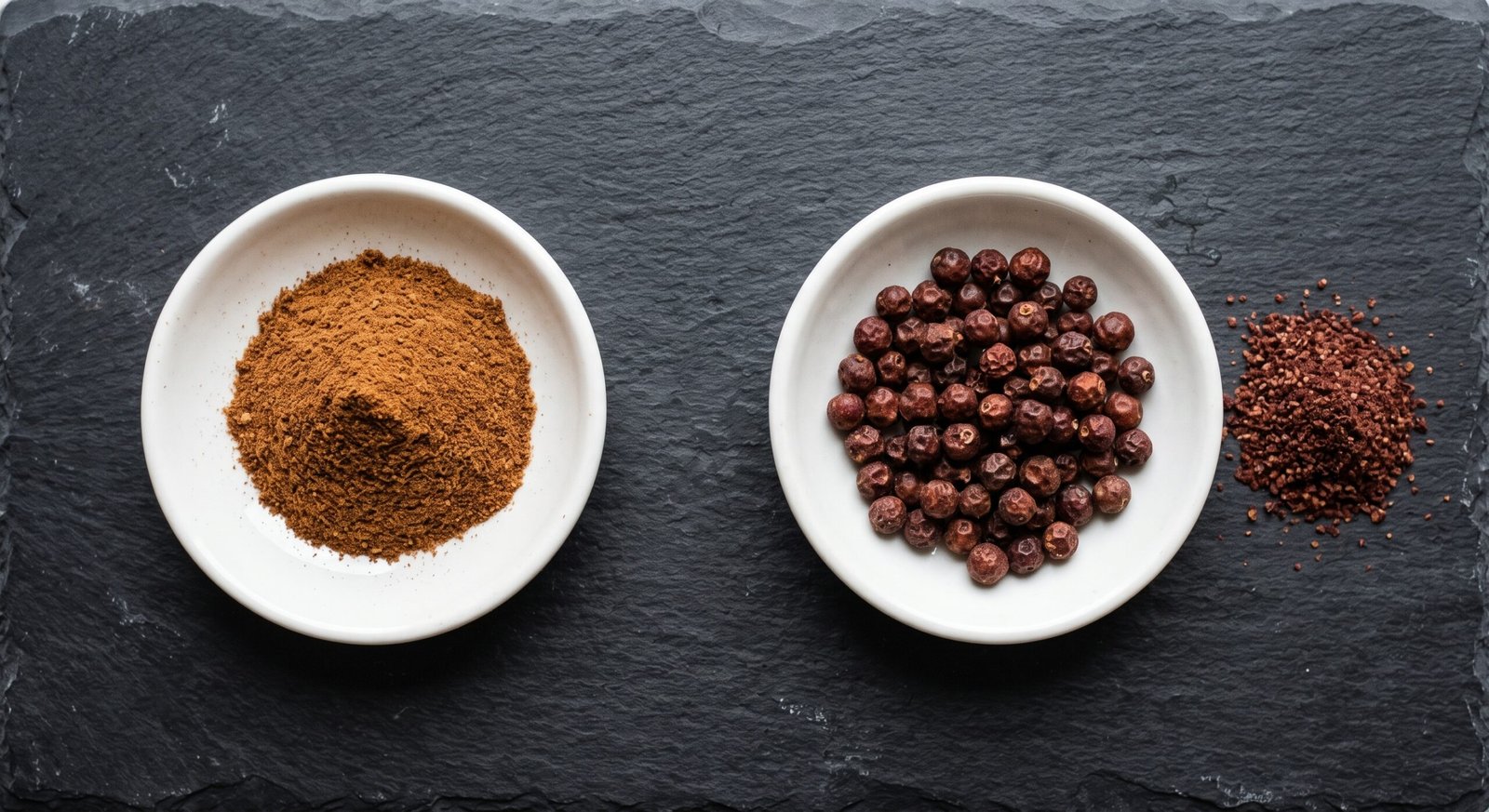
Allspice has the worst name in the spice cupboard.
It sounds like a shortcut — all the spices, in one container. It is not. Allspice is one dried berry from one tree, and the name is a description of what it tastes like, not what is in it.
That single misunderstanding is why people put allspice into pumpkin pie recipes at full strength and wonder why the result tastes medicinal.
Here is the difference, and what actually happens when you swap one for the other.
The One-Sentence Answer
One is a spice. The other is a recipe.
Allspice is a single ingredient, the way black pepper is a single ingredient. Pumpkin pie spice is a blend of five ground spices, and allspice is the smallest share of it.
Calling them the same thing is like calling a violin an orchestra because you can hear one in there.
What Allspice Actually Is
The berry comes from Pimenta dioica, an evergreen tree native to Jamaica and parts of Central America. The berries are picked green, dried until they turn reddish-brown, and sold whole or ground.
Spanish explorers found it in the Caribbean, thought it was a relative of black pepper, and called it pimienta. The confusion survives in the modern names — the French still call it piment de la Jamaïque, and in English it is sometimes sold as pimento.
The English name arrived later and for a different reason. Cooks said it tasted like cinnamon, nutmeg and cloves at once, so it became “allspice.”
That is the useful part. Allspice genuinely does taste like three spices at the same time — warm, slightly peppery, faintly sweet, with a long finish. Britannica covers its botany and the history of the name.
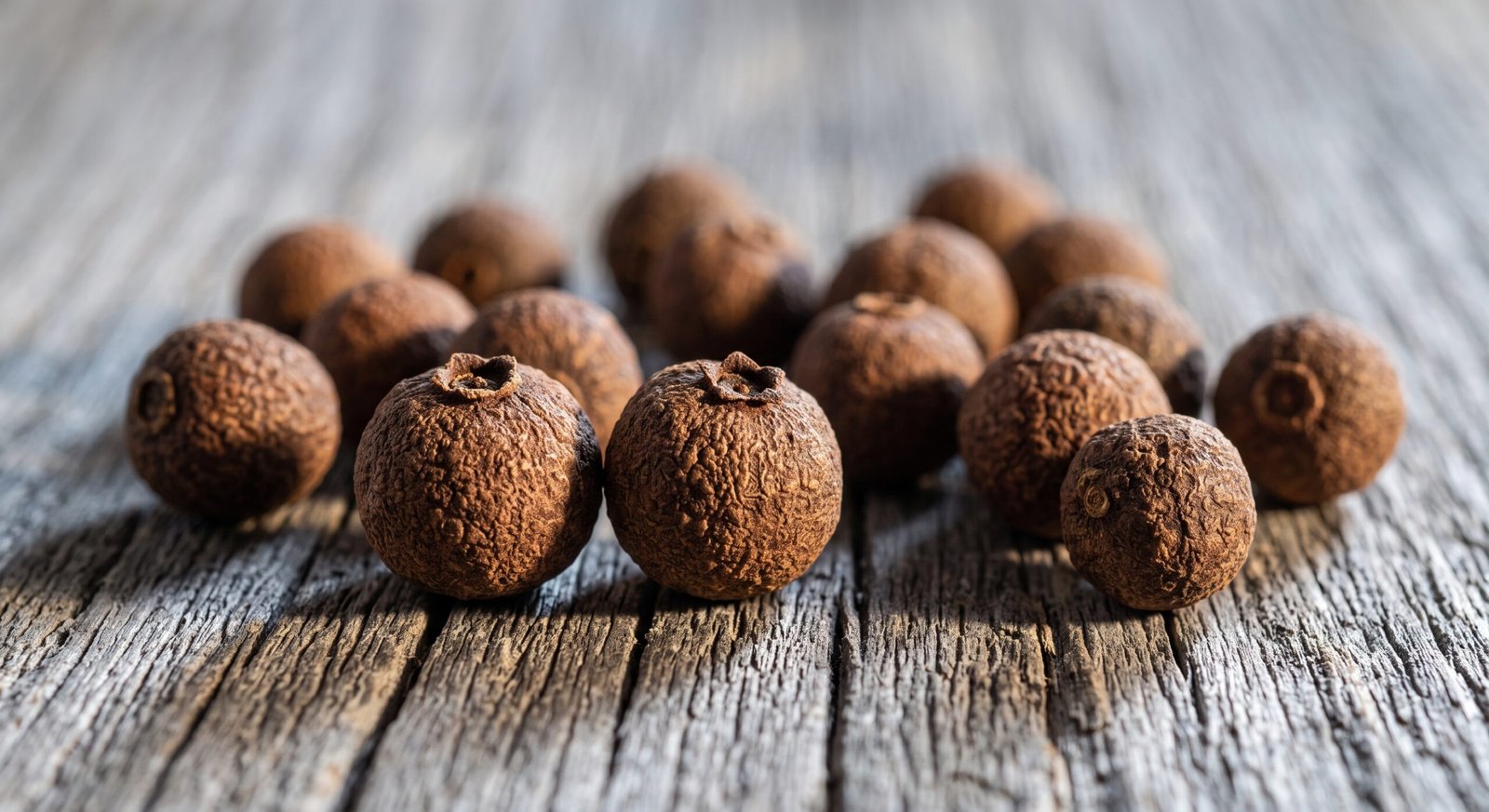
None of which makes it a blend. It is one berry that happens to be a very good mimic.
What Pumpkin Pie Spice Is
Five ground spices, in roughly these proportions:
| Spice | Approximate share |
|---|---|
| Cinnamon | 4 parts |
| Ginger | 2 parts |
| Nutmeg | 1 part |
| Cloves | 1 part |
| Allspice | 1 part |
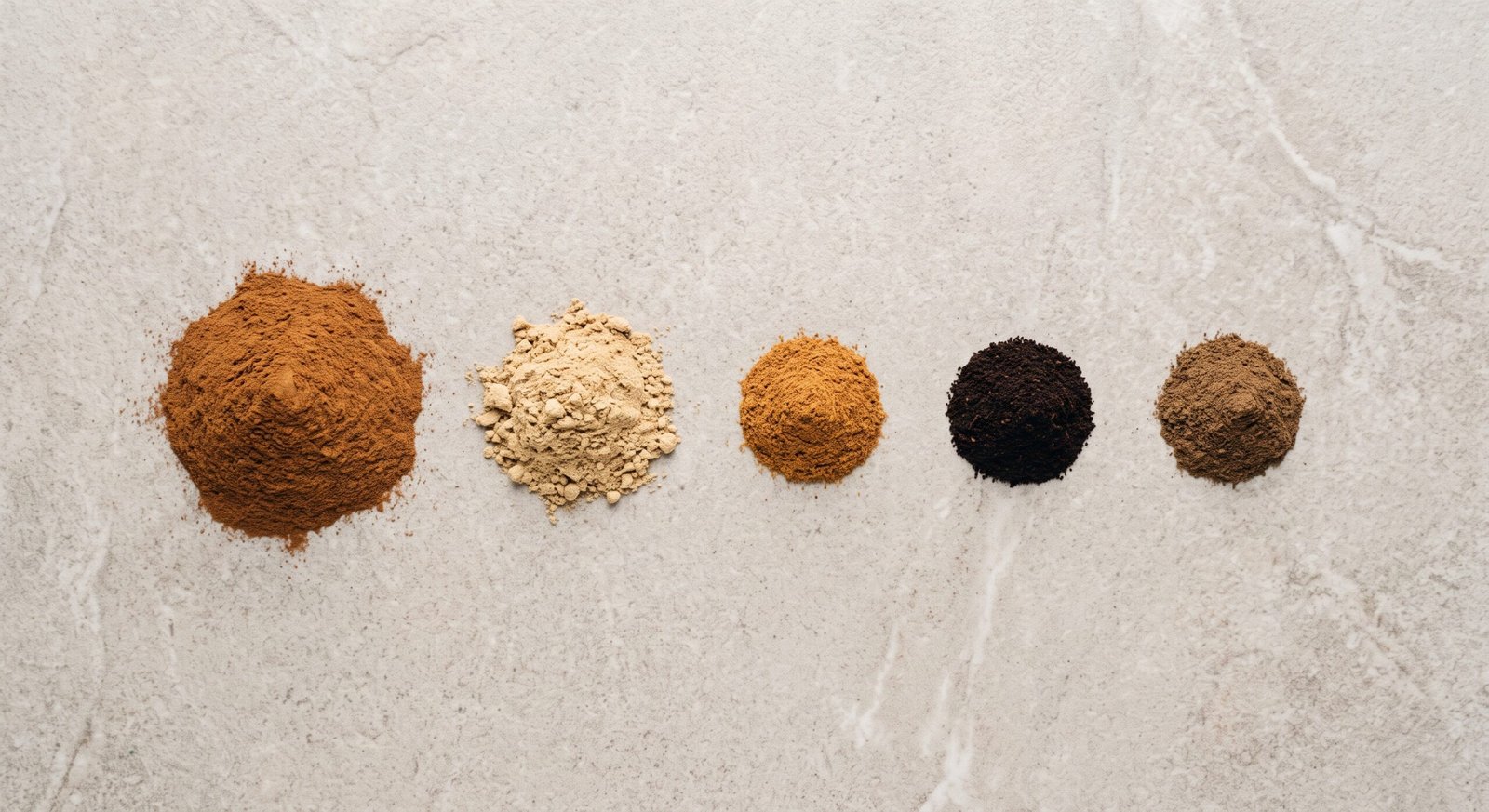
Nine parts in total, of which allspice is one.
So allspice is not the opposite of pumpkin pie spice. It is a component of it — and the joint holding the other four together, since it already tastes a bit like most of them.
What allspice is not doing in that blend is providing the cinnamon. Cinnamon is nearly half the mixture and carries the flavour people actually recognise. If you remove it, the blend stops being recognisable no matter what else stays.
Can You Swap Them?
Not one-for-one, and the failure is predictable.
Replace a tablespoon of pumpkin pie spice with a tablespoon of allspice and two things go wrong at once. You lose the cinnamon and ginger that make up two thirds of the blend, and you triple the allspice relative to where it should sit. The result tastes sharp and slightly medicinal rather than warm.
It is the same mistake as replacing a chord with one note. Technically that note was in there. It is not the same sound.
If allspice is genuinely all you have: use half of what the recipe asks for. You will get a warm, clove-forward version of the dish rather than a diluted one. Adding even a quarter teaspoon of cinnamon alongside it improves the result more than any other single adjustment.
Going the other way is easier. If a recipe calls for allspice and you have pumpkin pie spice, you can usually substitute one-for-one in sweet baking. The extra cinnamon and ginger read as normal in a dessert. Do not do it in savoury cooking, where the cinnamon will be obvious and unwelcome.
How Much To Use If You Only Have One
The swap works in both directions, but not at the same rate. Here is what to actually measure.
| You have | Recipe asks for | Use |
|---|---|---|
| Allspice | 1 tsp pumpkin pie spice | ½ tsp allspice, plus ¼ tsp cinnamon if you have it |
| Allspice | 1 tbsp pumpkin pie spice | 1½ tsp allspice, plus ¾ tsp cinnamon if you have it |
| Pumpkin pie spice | 1 tsp allspice, sweet baking | 1 tsp pumpkin pie spice |
| Pumpkin pie spice | 1 tsp allspice, savoury cooking | Do not swap. Use black pepper and a pinch of cloves instead |
The halving rule exists because allspice is concentrated in a way the blend is not. In pumpkin pie spice it sits at one part in nine, diluted by four parts cinnamon. On its own it arrives at full strength with nothing to soften it.
Think of it as neat spirit versus a cocktail. Same ingredient, very different pour.
If neither is in the cupboard, the substitute guide ranks the other options, and the ingredients and ratios guide covers how to build the blend from scratch.
Where Each One Belongs
This is the part the comparison posts usually miss: these two are not competing for the same shelf.
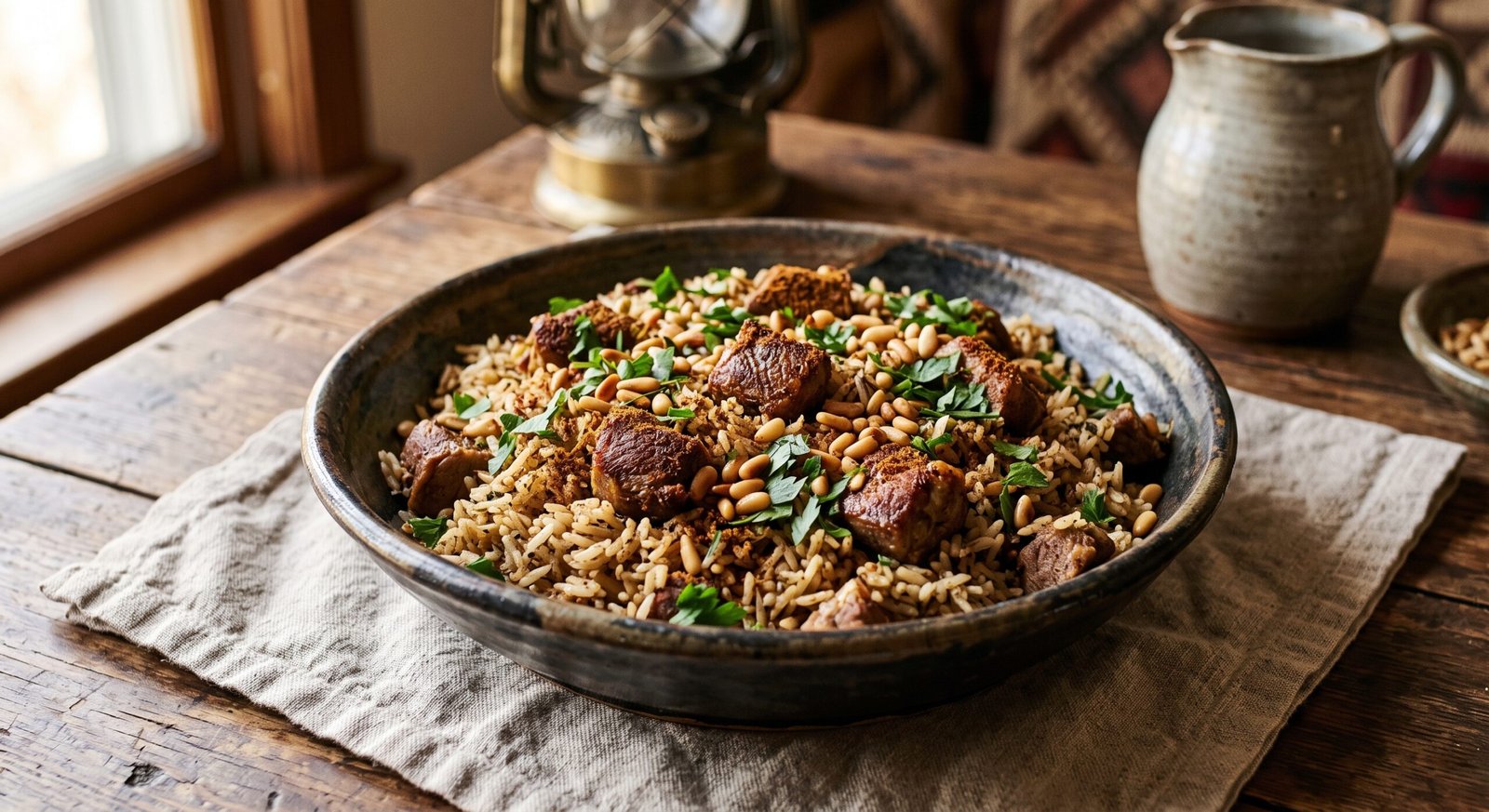
Allspice lives in savoury food more than sweet. It is a backbone of Jamaican jerk seasoning. It goes into meat cures, pickling brines, sausages, braises and stews. In the Middle East it is standard in spiced meat and rice cooking, which is why it turns up in blends that have nothing to do with dessert.
Our Baharat Spice Blend contains allspice alongside black pepper, paprika, cumin, ginger, cloves and fenugreek. It goes on lamb, chicken, rice and soups. It shares three ingredients with pumpkin pie spice — ginger, cloves and allspice — and tastes nothing like it, because the proportions and the other four spices decide everything.
Pumpkin pie spice lives almost entirely in sweet food. Pie, obviously, but also oatmeal, coffee, pancakes, muffins and roasted autumn vegetables where natural sugar meets it halfway.
The overlap between the two is real but narrow. Keep both if you cook broadly. If you only bake, the blend is the one that earns the space.
Our Pumpkin Pie Spice Blend is the five spices and nothing else, in a 113g resealable pouch.
Frequently Asked Questions
Is pumpkin pie spice the same as allspice?
No. Allspice is a single dried berry. Pumpkin pie spice is a blend of five spices, one of which is allspice.
Can allspice be substituted for pumpkin pie spice?
Only at reduced quantity. Use half the amount the recipe asks for, and add a little cinnamon if you have it.
Can I use allspice in pumpkin pie?
Yes, at about half the quantity the recipe lists for pumpkin pie spice. The result will be warmer and more clove-forward than the classic version.
Can I use pumpkin pie spice instead of allspice?
In sweet baking, yes, one-for-one. Avoid it in savoury cooking, where the cinnamon and ginger will be noticeable.
Why is allspice called allspice if it is one spice?
Because it tastes like cinnamon, nutmeg and cloves at the same time. The name describes the flavour, not the contents.
Is allspice the same as pimento?
Yes. Allspice is sold as pimento in some markets, and in French as piment de la Jamaïque. They are the same dried berry.
How much allspice is in pumpkin pie spice?
About one ninth of the blend by volume, in a typical 4-2-1-1-1 ratio.
Bottom Line
Allspice is one berry doing a convincing impression of three. Pumpkin pie spice is five spices with cinnamon in charge. They overlap, they are not interchangeable at equal measure, and they mostly belong in different halves of the menu.
👉 Shop Pumpkin Pie Spice Blend — free shipping across Canada